
Professional Mold Testing to Identify Hidden Concerns
Certified mold testing using air sampling, surface sampling, and moisture detection to identify mold in residential and commercial properties — so you know exactly what you're dealing with.
Certified
PMII Certified
Professional Mold Inspection Institute (PMII)
Cert #CMR0000049481
Environmental Testing and Lab-Based Analysis
Mold can grow anywhere moisture and organic materials are present — and it isn't always visible. Professional mold testing helps identify whether mold is present, where it may be hiding, and the conditions that allow it to grow. Rather than guessing, testing gives you clear information to make decisions about your property.
At Aegis, our testing is performed by a PMII Certified Mold Remediator (CMR). We use environmental testing, indoor air quality evaluation, air sampling, surface sampling when appropriate, and lab-based analysis to evaluate conditions thoroughly and report our findings clearly.
When Should You Get Mold Testing?
Musty Odors
A persistent musty or earthy smell often signals hidden mold, even when nothing is visible.
Visible Staining
Dark spots, discoloration, or fuzzy growth on walls, ceilings, trim, or grout.
After Water Damage
Mold can begin to develop after leaks, flooding, or high humidity. Testing confirms whether it has.
Hidden Moisture
Moisture behind walls, in attics, or crawlspaces can support mold growth you can't see.
What Happens During a Mold Inspection?
A professional mold inspection is a systematic evaluation of your property. The process generally includes:
- 1
Visual Assessment
We inspect areas prone to moisture — attics, crawlspaces, around plumbing, windows, and HVAC — looking for visible mold, staining, and moisture.
- 2
Moisture Detection
Using moisture meters and thermal imaging, we identify elevated moisture in building materials that could support hidden mold growth.
- 3
Air & Surface Sampling
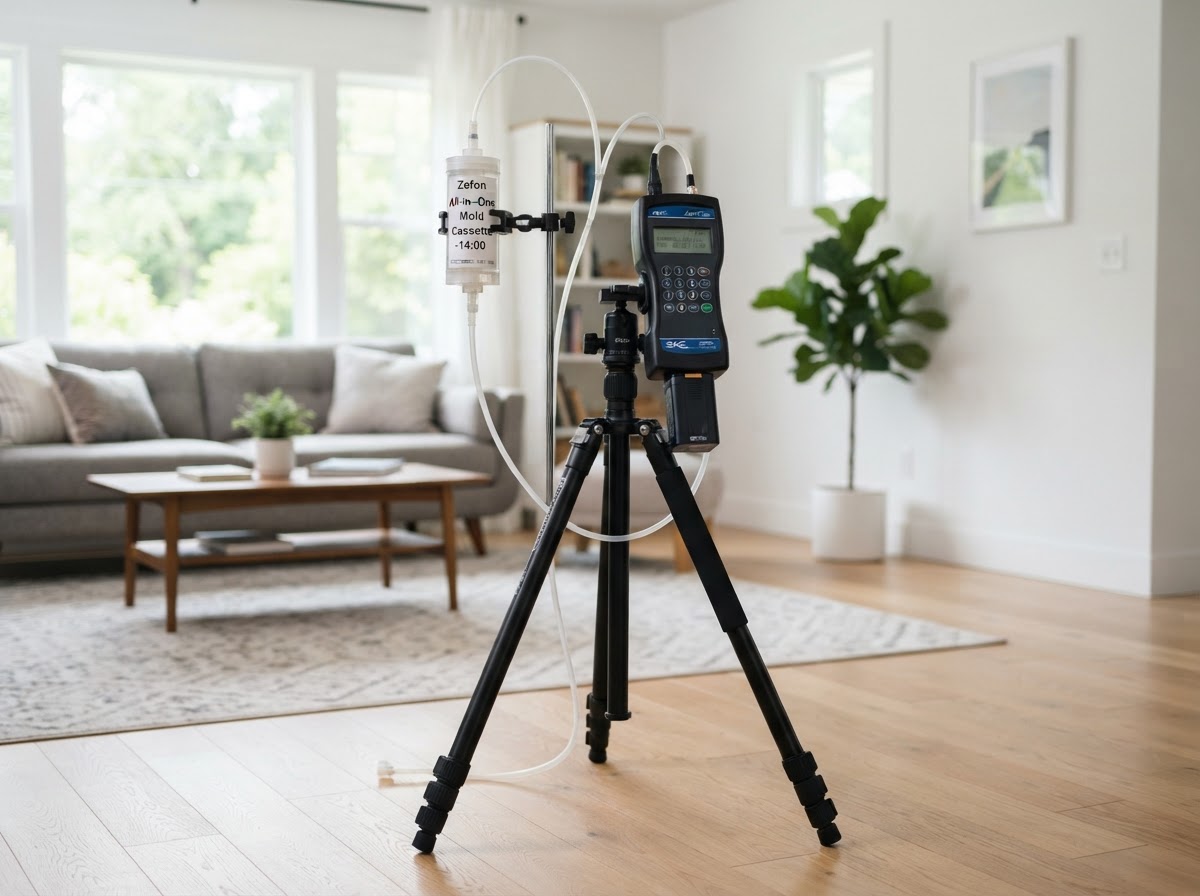
When appropriate, we collect air samples and surface samples to help identify the presence and type of mold.
- 4
Clear Reporting
You receive a clear explanation of findings and recommended next steps — whether that's remediation, monitoring, or further investigation.
Where Mold Commonly Hides
Mold thrives in damp, dark, and poorly ventilated areas. Common hiding spots include:
Mold Testing After Water Damage
Water damage from leaks, pipe failures, or storms creates ideal conditions for mold. Because mold can develop quickly, testing after any water event helps confirm whether growth has occurred and whether remediation is needed. If you've had recent water damage, consider our water damage services alongside mold testing.
Residential Mold Testing
We test homes, apartments, and rental properties — from attics and crawlspaces to living areas — to help homeowners, buyers, and landlords understand mold conditions.
Commercial Mold Testing
We work with property owners, managers, and businesses to assess commercial buildings, offices, and multi-unit properties for mold and moisture concerns.