
Why Moisture Matters
Water damage can come from many sources — roof leaks, plumbing failures, appliance leaks, storms, and groundwater intrusion. What matters most is identifying and correcting the moisture, because prolonged moisture can contribute to microbial growth and building damage.
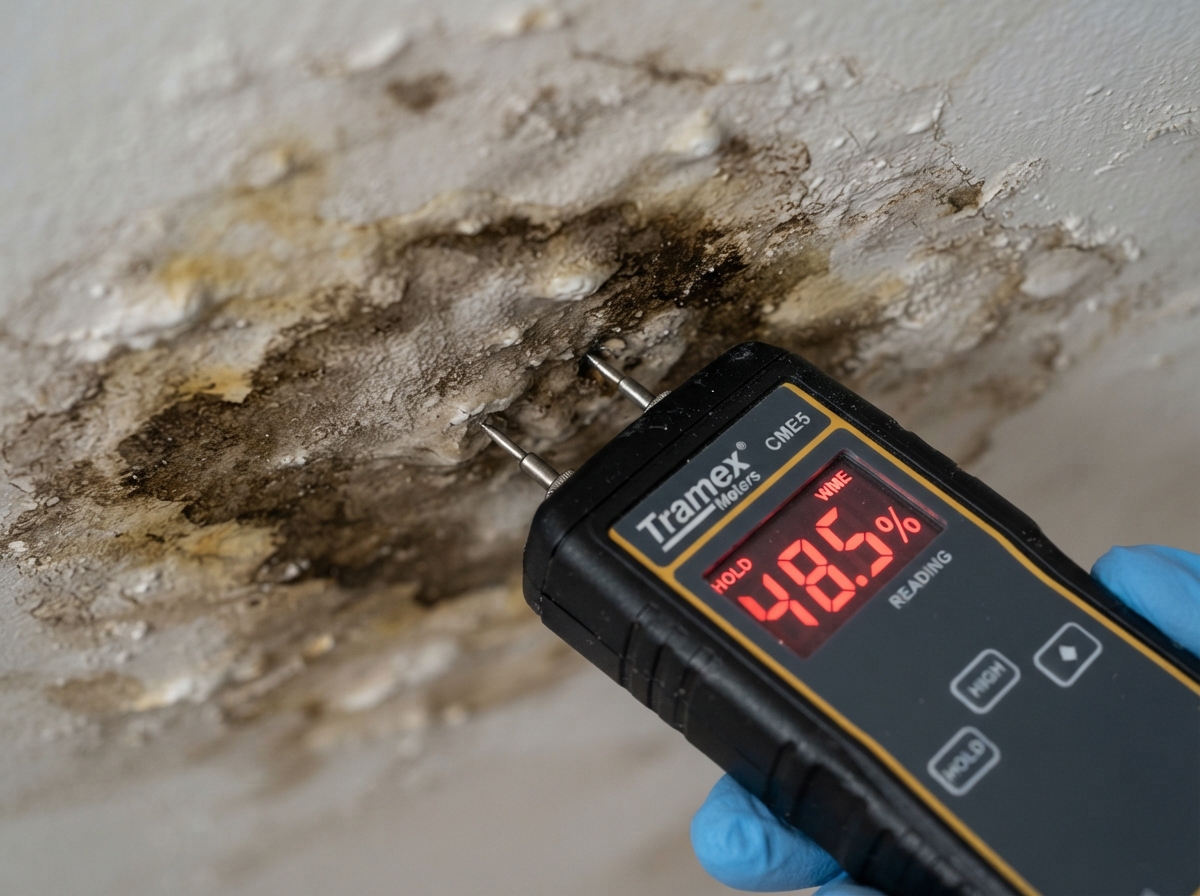
At Aegis, we assess water damage using moisture meters and thermal imaging to find both visible and hidden moisture, then help plan the appropriate mitigation and drying approach.
Mold can begin developing within 24 to 48 hours after water damage. Quickly identifying and drying affected materials can help limit mold growth and additional property damage.
Common Sources of Water Damage
Roof Leaks
Damaged or aging roofs can allow water into attics, ceilings, and walls.
Plumbing Leaks
Pipe failures, leaking fixtures, and slow leaks behind walls are common sources.
Appliance Leaks
Water heaters, washing machines, dishwashers, and refrigerators can leak.
Water Intrusion
Storm-related moisture, groundwater, and poor drainage can enter the building.
Where Water Damage Hides
Water travels through building materials and can collect in areas that look dry on the surface. We inspect and assess:
Our Water Damage Services
Residential Water Damage
Assessment and mitigation for homes, apartments, and rental properties affected by leaks, intrusion, or flooding.
Commercial Water Damage
Moisture assessment and mitigation for commercial buildings, offices, and multi-unit properties.
Water damage and mold often go together. If you've had water damage, consider mold testing to check whether growth has developed, and mold remediation if mold is found.