
Illegal Marijuana Grow House Remediation
Specialized assessment and remediation of properties previously used as illegal marijuana grow operations — addressing mold, excessive moisture, altered ventilation, electrical modifications, contamination concerns, and water damage.
Certified
PMII Certified
Professional Mold Inspection Institute (PMII)
Cert #CMR0000049481
A Specialized Property Challenge
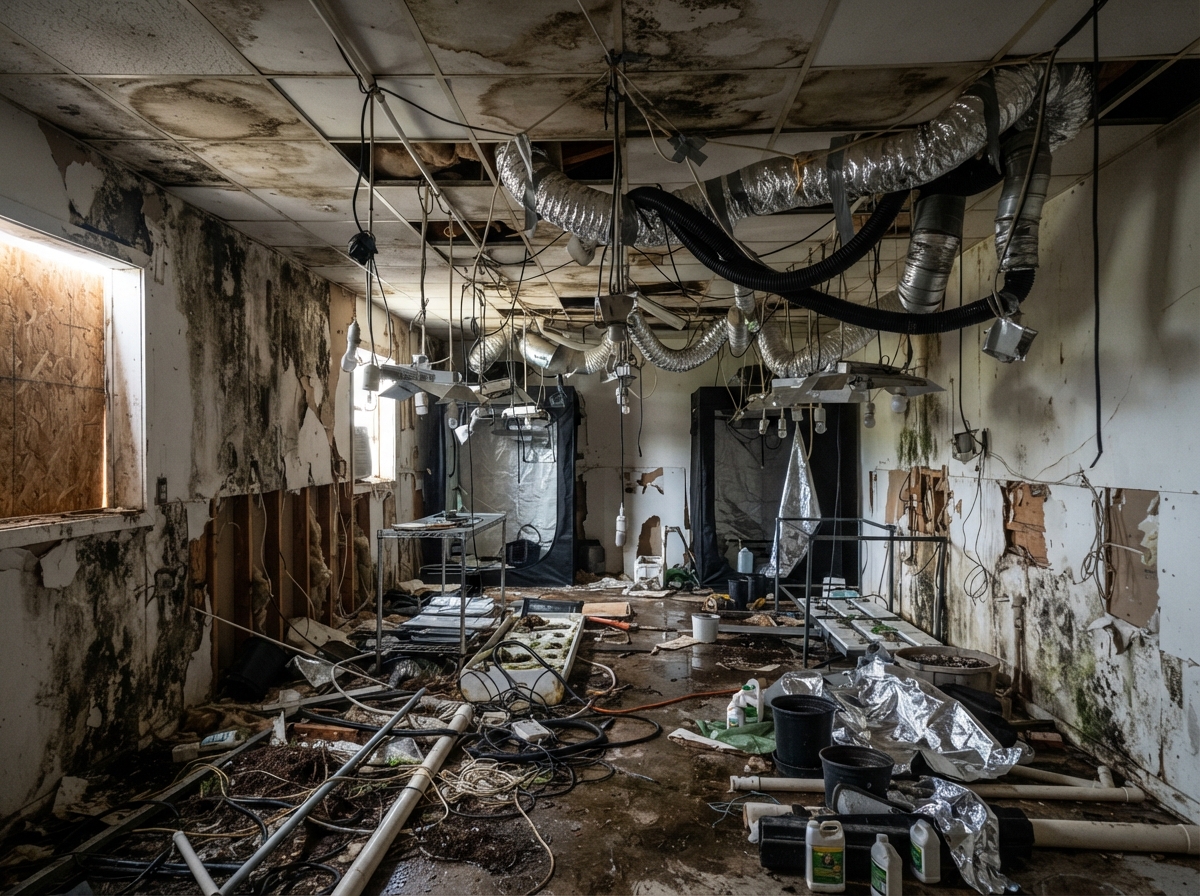
Illegal indoor grow operations can cause unique property damage. The conditions created by prolonged indoor growing — excessive humidity, altered ventilation, electrical modifications, and plumbing changes — can leave behind mold, moisture damage, altered building systems, odors, and damaged materials.
Aegis provides professional assessment and remediation to help property owners, investors, real estate professionals, landlords, property managers, and banks evaluate affected properties and plan the work needed to return them to safe, normal use.
Common Problems Found in Former Grow Houses
Excessive Humidity
Indoor grow operations generate high humidity that can saturate building materials.
Mold Growth
Prolonged high humidity creates ideal conditions for mold on walls, ceilings, and in cavities.
Altered Ventilation
Modified or added ventilation systems can damage building systems and leave contamination.
Electrical Alterations
Improper electrical modifications for high-wattage lighting can create safety and code concerns.
Plumbing Changes
Improper plumbing alterations for irrigation can cause leaks and water damage.
Material Damage
Drywall, insulation, flooring, and structural materials may be damaged or contaminated.
Mold & Excessive Humidity
Indoor grow operations maintain high humidity to support plant growth. Over time, this humidity can saturate drywall, insulation, wood, and other materials throughout the property. The result is often widespread mold growth — in wall cavities, attics, crawlspaces, and on exposed surfaces. Our assessment identifies the extent of mold and moisture damage so it can be properly addressed.
Water and Moisture Damage
Grow operations often involve extensive irrigation and water handling. Improper plumbing alterations can cause leaks behind walls and under floors, leading to water damage that may not be visible. We use moisture meters and thermal imaging to locate hidden moisture and assess the full extent of the damage.
Altered Ventilation & Electrical Systems
Grow operations frequently modify ventilation to manage heat, humidity, and odors — and electrical systems to support high-wattage lighting. These alterations can damage building systems, create safety concerns, and leave behind contaminated ductwork and equipment. Our assessment documents these conditions as part of the remediation plan.
Building Material Damage
Drywall, insulation, flooring, framing, and other materials may be damaged by moisture, mold, or direct alteration. Some materials can be cleaned; others may need to be removed and replaced. The approach depends on the conditions found during assessment.
Our Assessment & Remediation Process
Property Assessment
We evaluate the property to identify mold, moisture damage, altered systems, and contaminated materials.
Identify Problems
We document the conditions found — humidity damage, mold, electrical and ventilation alterations, and material damage.
Remediation & Restoration Planning
Based on the assessment, we develop an appropriate plan to address the conditions and prepare the property for normal use.
Preparing the Property for Normal Use
We work through the plan to address mold, moisture, damaged materials, and altered systems so the property can move toward safe, normal use.
We approach grow house remediation professionally and thoroughly — focusing on the property conditions and the work needed to return the property to safe, normal use.